
Missive is one of the best value shared inboxes on the market: chat sits next to the email thread, assignment is quick, and Starter comes in around $14 per user per month. People still look for a Missive alternative for three predictable reasons: the interface is dense for non-technical teammates, the five-user cap on Starter arrives fast, and a good share of teams discover they were never really collaborating on those threads at all.
The 8 best Missive alternatives in 2026
Nolario
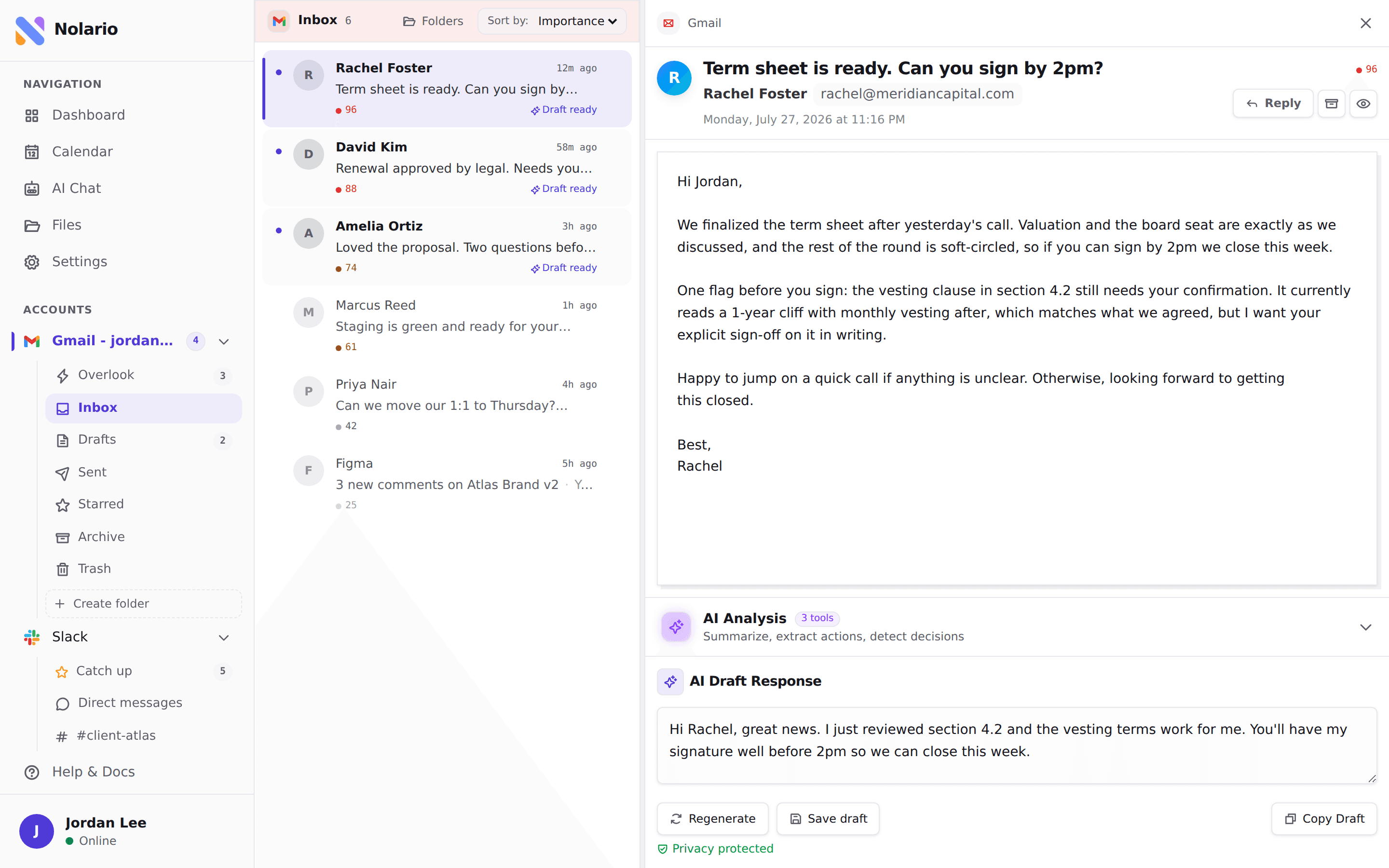
Our pickA personal inbox that ranks every channel by what actually needs you.
Best for
Founders and executives, not support queues
Price
€29/mo (waitlist)
Nolario answers a different question than Missive. Instead of "who on the team owns this thread", it answers "which of these 200 messages needs me, and in what order" across Gmail, Outlook, Slack, Teams and calendar, then drafts the reply in your voice.
Be clear about the trade: there is no assignment, no internal comments, no SLA reporting. If two people work the same mailbox, keep a shared inbox. If you are the only person who was ever going to answer, this removes the overhead entirely.
Front
The polished, enterprise-grade shared inbox.
Best for
Teams that need reporting, SLAs and a UI that teaches itself
Price
From ~$25/seat/mo
Front is what most teams compare Missive against: the same model, smoother onboarding, deeper analytics and a bigger integration catalogue. You pay roughly double per seat for that, and the Professional tier near $65 is a serious jump.
Hiver
Shared inbox inside Gmail.
Best for
Google Workspace teams that hate new apps
Price
From ~$25/user/mo (annual)
Hiver puts assignment, notes and SLAs on top of the Gmail your team already uses, which makes it the least disruptive migration on this list. Same price ballpark as Front, so choose it for adoption rather than savings.
Help Scout
Shared inbox that behaves like a help desk.
Best for
Customer-facing mailboxes
Price
Free up to 5 users; from ~$25/user/mo
Saved replies, knowledge base, customer history and a genuinely usable free tier for five users. If your Missive workspace is mostly support@, this is a better-shaped tool.
Drag
Kanban boards inside Gmail.
Best for
Tiny teams that think in boards, not threads
Price
From ~$12/user/mo
Drag is the cheapest way to keep a Missive-like workflow without leaving Gmail: boards, assignment, shared drafts. Reporting is thin and there are no chat or SMS channels.
Gmelius
Shared inboxes with automation and sequences.
Best for
Mailboxes that do support and outbound at once
Price
From ~$19/user/mo (annual)
Gmelius adds workflow automation and email sequences to the shared inbox, useful when the same address handles replies and follow-ups. Conversation caps on lower tiers are the thing to check before committing.
Zoho TeamInbox
The cheapest credible swap.
Best for
Price-sensitive teams, especially existing Zoho users
Price
From ~$6/user/mo
Shared inboxes, internal threads and assignment at roughly a third of Missive's entry price. Plainer interface, mostly Zoho-native integrations, but the core job is done.
Spark
A clean multi-account mail app with light team features.
Best for
Small teams that want shared drafts without a full queue
Price
Free; paid from ~$8/user/mo
Spark offers shared drafts and comments alongside a tidy multi-account inbox, plus AI compose and summaries. It is the gentlest step down from Missive if collaboration was a nice-to-have rather than the point.
Quick comparison
| Nolario | Missive | Front | Hiver | Zoho TeamInbox | |
|---|---|---|---|---|---|
| Assignment and internal comments | |||||
| Email + Slack + Teams in one feed | Email + social | ||||
| AI importance scoring | |||||
| Free option | Waitlist | Trial | Trial | Trial | |
| Starting price | €29/mo (waitlist) | ~$14/user/mo | ~$25/seat/mo | ~$25/user/mo | ~$6/user/mo |
The bottom line
Stay in the shared-inbox category and Front is the upgrade, Hiver the easiest migration and Zoho TeamInbox the cheapest landing. But if you audit last month and find that almost every thread had exactly one obvious owner, the honest recommendation is to stop paying for collaboration and start paying for attention, which is the job Nolario was built for.
