
A unified inbox app pulls your scattered channels into one place so you stop bouncing between tabs. But "unified" means very different things across products, some just merge email accounts, others bring in Slack, Teams and calendar, and only a few rank what matters. Here are the 8 best unified inbox apps in 2026, and who each one is really for.
The 8 best unified inbox apps in 2026
Nolario
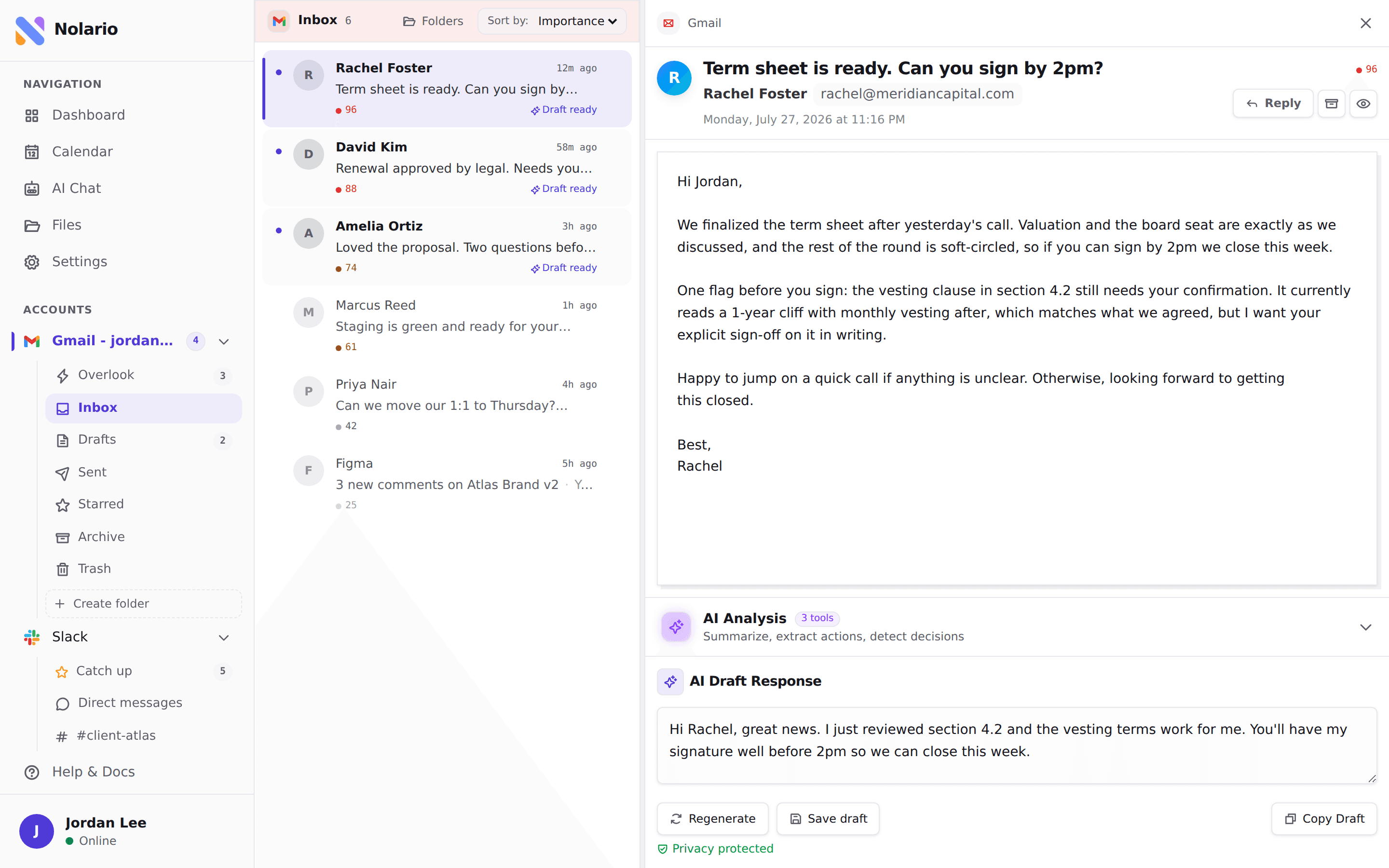
Our pickEvery channel in one feed, ranked by AI importance.
Best for
Founders and operators who want one prioritized view of everything
Price
€29/mo (waitlist)
Nolario pulls Gmail, Outlook, Slack, Teams and calendar into a single feed and scores every item for importance, so it is not just merged, it is ordered by what needs you. It also drafts replies in your voice across channels. If your goal is one screen that answers "what should I deal with right now?" this is the most complete option here.
Missive
A shared, unified inbox with team chat built in.
Best for
Small teams working a mailbox together
Price
Free tier; paid from ~$18/user/mo
Missive combines email accounts and adds internal comments, assignments and shared drafts. Excellent for teams; heavier than a single founder needs, and priced per seat.
Front
The customer-communication hub.
Best for
Support, success and ops queues
Price
From ~$19/user/mo
Front unifies shared inboxes, chat and SMS with routing, SLAs and analytics. Powerful for customer-facing teams, overkill for a personal inbox.
Spike
Email, chat and notes in one conversational app.
Best for
People who want email to feel like messaging
Price
Free tier; Pro from ~$8/mo
Spike merges multiple email accounts with team chat and collaborative notes, in a chat-style interface. Friendly and modern; still centered on email plus its own chat.
Spark Mail
A polished multi-account inbox with smart grouping.
Best for
Individuals who want a clean, free email hub
Price
Free; Premium from ~$8/mo
Spark unifies Gmail, Outlook, iCloud and more with a Smart Inbox that groups and surfaces. Great free email experience; no real Slack or Teams.
Mailbird
A Windows inbox that puts your apps in the sidebar.
Best for
Windows users who want email plus messaging apps together
Price
From ~$3/mo
Mailbird unifies email accounts and docks apps like WhatsApp, Slack and Google Calendar in a sidebar. A practical single-window setup, though it is Windows-first and app-by-app rather than one merged feed.
Shift
A workspace that unifies accounts and web apps.
Best for
Anyone juggling many Gmail/Outlook accounts and SaaS tools
Price
Free tier; paid from ~$12/mo
Shift gives every account and app its own tab in one desktop window, cutting logins and switching. It is more of an app launcher than a true merged inbox, but it tames account sprawl well.
Rambox
An all-in-one messaging and app aggregator.
Best for
People who want every chat app in one window
Price
Free tier; Pro from ~$4/mo
Rambox packs Slack, Teams, WhatsApp, email and hundreds of web apps into one workspace. Broad coverage; it aggregates apps rather than prioritizing messages across them.
Quick comparison
| Nolario | Missive | Spark | Mailbird | Shift | |
|---|---|---|---|---|---|
| Email accounts in one view | |||||
| Slack & Teams as channels | Partial | Sidebar | Tabs | ||
| AI importance ranking | Partial | ||||
| AI drafts in your voice | |||||
| Free option | Trial |
How to choose
If a team shares one mailbox, start with Missive or Front. If you mainly want your accounts and apps side by side, Mailbird, Shift or Rambox do the job. But if you want one feed that ranks email, Slack, Teams and calendar by what actually needs you, that is exactly what Nolario is built to do.
